
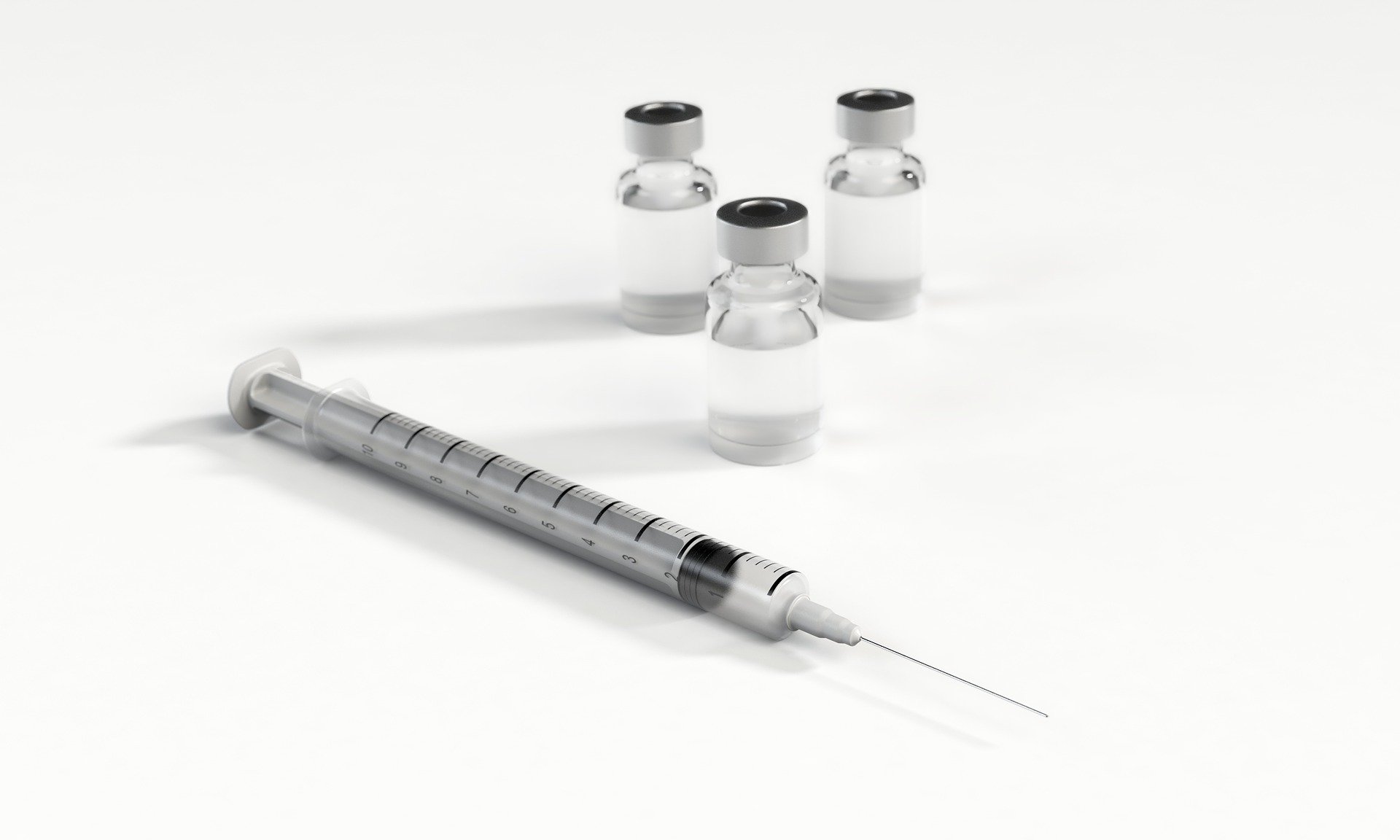
The following white paper has appeared on the internet this morning. Could it be that Bitcoin could fund and push out the cure for coronavirus?
While 2019-nCoV has not officially reached pandemic status as of this writing, development of an affordable and accessible vaccine is a high priority. Our approach is outside of academia and the pharma industry, offering an alternative that might otherwise go unexplored.
For between $10-25k, we are proposing to develop a plasmid DNA vaccine against the SARS-CoV-2 virus. This initial funding will allow us to design and synthesize the plasmid, perform preliminary testing, and send it out to interested labs.
 With higher levels of funding, we can begin its production, scale-up and distribution. While we will be performing quality control testing to ensure that the vaccine is safe, we will be unable to test it in a clinical trial or animal models, and would leave that part of the process to be hashed out by the community.
Without tens of millions of dollars there is no viable pathway for us to obtain the normal government clearance for a clinical trial, so our vaccine’s effectiveness will remain a mystery until several weeks or months after. At that point we can use an ELISA* assay on samples from vaccinees to quantify the level of antibodies in their blood.
Note that an ELISA is the closest we will be able to get to determining efficacy. In cases where a virus is not widely circulating among the population, vaccines have been approved based on these antibody levels (along with safety testing), although even high levels of antibody against a virus are not a guarantee of immunity.
This is not a treatment we expect to be adopted by the medical community in any official sense. Many other companies are developing vaccines against SARS-CoV-2, and those are what healthcare systems will rely on next year and beyond. Our vaccine will be, at best, a stopgap until those clinically-trialed treatments are widely available.
Goal: Our aim is to develop a potential vaccine, first by designing the necessary protocols and components, and subsequently by manufacturing it ourselves. Any DNA sequences and hardware we develop during this project will be made publicly available and accessible under permissive licenses like the Creative Commons BY SA 4.0 license or placed into the public domain. Any subsequent commercial licensing will be in addition to this.
This is not a cure. Untested vaccines are probably ineffective and come with no guarantees. This is true whether they are developed by a government, a large corporation, or a collective of biohackers, just like any other medication. Our highest priority is to ensure that any vaccine we develop is not harmful, and its potential effectiveness is secondary to its safety.
Don’t try this at home. Team CoroHope disclaims all liability and gives no guarantees or warrants. Use of any of this information is entirely at your own risk. This should not be considered a reliable vaccine.
The Virus Background
Virus vaccines fall into three categories: attenuated*, inactivated*, or plasmid DNA vaccines*.
Attenuated virus has been weakened by either recombining it with a harmless variant (as with the flu vaccine), or by growing a variant of the virus that is less infectious but still generates an immune response. Inactivated vaccines are similar; fully infectious particles are grown, but are inactivated by heat, chemicals, etc. until they cannot reproduce in a host, but still generate immunity after injection.
Both of these options, however, require extensive growth of fully infectious virus in the lab, and acquisition of said virus. This is an extreme risk for any DIY biologists, as 2019-nCoV requires handling in a biosafety level 3 facility (BSL-3*). While an ersatz DIY BSL-3 setup may be technically possible, this is not an option we are considering.
The third category, DNA vaccines, is far more applicable to our efforts. For this approach, a plasmid is grown in bacteria, purified, and injected into a patient. When taken up by cells in the body, the plasmid will express a protein from the virus. By triggering an inflammatory response at the injection site, the immune system will detect the foreign protein and begin to generate antibodies. Please keep in mind that no DNA vaccines have yet been approved for clinical use, though many are in active development.
DNA vaccines also have minimal risks compared to attenuated/inactivated vaccines. Typical side effects are limited to injection site inflammation, which in the case of vaccines is arguably a benefit, and adverse effects related to delivery of the plasmid (temporary pain caused by electrically-induced transfer of the plasmid into cells, which is discussed later).
Two companies are currently developing a SARS-CoV-2 vaccine with such an approach: Inovio Pharmaceuticals*, and Moderna*. Inovio uses a traditional plasmid platform, and encouragingly their vaccine for MERS (another coronavirus) has generated a significant antibody response in early trials*. Moderna uses a synthetic RNA vaccine, which has the same basic effect as a DNA plasmid, but is harder to produce at a DIY level, harder to scale in general, and much more expensive than a DNA-based platform.
Both of the above vaccines express a modified form of the spike protein from 2019-nCoV, though the exact details remain trade secrets. However, we can make educated guesses about those modifications.
Plasmid design
Our first step is to design the plasmid.
Methods
The main component is the coding sequence of the spike protein, which is freely available in bioinformatics databases. Modifications to increase its stability can be assessed bioinformatically: for example, one of the novel mutations in SARS-CoV-2 is a furin cleavage site in the spike protein*; as such, we may want to consider mutating this site. This data is, of course, preliminary, but something to consider.
The rest of the plasmid also has design considerations. It needs:
A promoter that drives expression of the protein: this is typically the CMV (cytomegalovirus) promoter, which gives strong expression and is enhanced by inflammation.
A polyA site after the coding sequence, which stabilizes the mRNA and increases expression: typically from either the BGH (bovine growth hormone) polyA, or SV40 (simian virus 40).
An origin of replication (ori) and antibiotic resistance gene (abr): these are pretty standard for plasmids; the ori allows the bacterial host to replicate the plasmid, while the antibiotic resistance ensures that only bacteria carrying the plasmid will survive during growth. A mutant pMB1 ori and kanamycin abr fit the bill.
Beyond this we may include accessory sequences to get more oomph from each plasmid – insulatory S/MAR elements that block inactivation of the plasmid (due to methylation of the ori and abr sequences), or others that enhance the inflammatory response. However, the above describes the basic skeleton.
The spike protein sequence will need to be synthesized by a third party, e.g. IDT, Genscript, Genewiz, Bio Basic. The other elements of the plasmid may be cobbled together from other plasmids with molecular cloning*, or synthesized.
Production
Once we have the plasmid assembled, the next step is to produce it in bulk. The usual host strain of E. coli for this is DH5-Alpha*, which has a number of mutations that make it ideal for plasmid production. After the plasmid is transfected into these cells, they can also be shipped (in a stabilized form) to any other interested lab, which is as close as biology gets to open source.
The first step is expansion of the bacterial cells in growth media; shaking flasks, heated to body temperature. After the cells have used all of the food energy in the media to grow and produce our plasmid, they are spun down in a centrifuge. At this point, we can source commercial purification kits known as Endofree Gigapreps, from a number of companies. With equipment available at any biology lab (centrifuge, freezer, micropipettes, biosafety cabinet, vacuum pump) these kits can turn a pellet of bacteria into purified plasmid in a couple of hours.
Note that the above method provides only limited quantities of plasmid – an Endofree Gigaprep kit purifies up to 10 milligrams of plasmid, and we will likely need several milligrams per patient. If we are shipping the plasmid to other labs, they can perform several of these purifications per day, without need of specialized equipment.
At large scale, however, we would be able to produce several grams of plasmid vaccine per day. By utilizing a bioreactor to grow bacteria at a far higher density than is achievable in flasks, and purifying the plasmid with a fast protein liquid chromatography (FPLC*) machine, yields can be increased by several orders of magnitude.
A bioreactor* replicates the same basic functions as a shaking flask: agitating the media to disperse the cells and promote aeration, and maintaining the temperature at which bacteria grow best. It also monitors the pH and oxygenation of the batch, while pumping in the nutrients and oxygen that the bacteria need to reach high densities. Thus, for the same volume, we can grow 20x the bacteria, and by monitoring the growth conditions, the bacteria are less stressed and produce more plasmid.
After cells harvested from the bioreactor are separated from the liquid and lysed (cracked open), the resulting goo is passed through a number of steps to separate the plasmid from the other intracellular components of the bacteria. There are several chemical precipitation and chromatography steps (using an FPLC) that exploit differences between the plasmid and the other contaminants: electrical charge, size, and binding affinity to various substrates.

Methods for the growth and purification of plasmids are fairly standardized, and by scaling up we can replace dozens of people and machines performing laborious Endofree Gigapreps with one trained operator. Our biologist has manufactured hundreds of different plasmids over the past decade (including DNA vaccines) in GMP* (Good Manufacturing Practice, or FDA-compliant) environments, and there are no great mysteries or hurdles to overcome.
Testing & Delivery
Testing
Batches of purified plasmid can be quality controlled with standard protocols.
We can assess the purity by quantifying residual bacterial DNA, protein and endotoxin with commercially-available kits. While one can argue that low levels of such contaminants are not harmful, and may even be beneficial when formulating a vaccine (as they stimulate the immune system even more), it is much safer to add immune-stimulating components to a pure batch of plasmid. Endotoxin* is a major concern, as even small amounts can lead to endotoxic shock, but it is easy to remove with correct techniques.
To assess plasmid quality, we can visualize the plasmid on an agarose gel and determine the proportion of supercoiled DNA (versus circular, nicked, and linear). Supercoiled plasmid is much more active than other forms, and good purification techniques can ensure that we reach >95% supercoiled DNA.
 Any plasmid produced at other labs via Gigaprep kits should also be checked using these methods – however, due to the low yield, plasmid from several kits should be pooled prior to testing. The quality of Gigaprep plasmid is probably sufficient when executed by a trained biologist, though manufacturers of the kits make no guarantees as they are “for research use only”.
Plasmid that has been quality-controlled in this manner can be stored, dried and sterile, until needed for injection. It may also be easily shipped at room temperature in this state, and individual doses can be dissolved in saline solution before injection, along with any adjuvants to provoke a stronger immune response. Beyond this point, we have no further means of testing before injection into patients.
Follow-up booster injections are highly recommended to continue stimulating the immune system, as with other vaccines.
Delivery
A critical point to note here is that DNA vaccines cannot simply be injected into a patient. Plasmids are quickly degraded in the body while outside of cells, so we need a method of getting them inside. The best option we have is electroporation*, where shortly after injection, an electrical pulse is applied to the injection site. Without electroporation, plasmid delivery efficiency is 10- to 1000-fold less effective.
For DNA vaccine delivery, the usual target is the dermis, or the layer of living cells in the skin. As a high proportion of infections enter the body through the skin, i.e. through a wound, the dermis contains many immune cells, helping to stimulate an antibody response. In addition, it is much easier to access via injection than any other tissue. The plasmid solution can be injected with a traditional syringe, or something akin to a tattoo machine.
After this, an array of short needle electrodes are inserted into and/or around the injection site. A sequence of square wave high-voltage, low-duration pulses punch small holes in the
membrane of nearby cells. A second sequence of low-voltage, higher-duration pulses pushes the plasmid through these holes by electrophoresis*. The holes in the cell membrane self-repair, and the plasmid makes its way to the cell’s nucleus to begin expression of the viral protein. Again, relevant protocols are available in the literature for the most efficient parameters.
Inovio uses their Cellectra device to achieve the same ends, though theirs is much fancier and more foolproof.
Alternative methods of delivery, such as lipofection or polyethyleneimine, may be considered if an electroporator is not available, but electroporation is widely regarded as the most efficient option. As we have no immediate way of comparing the efficacy of different methods, we feel that electroporation is the most reliable way of efficiently getting the vaccine inside cells, where it can do its job.
Funding and Planning
We are planning for a tiered approach to our development of a vaccine, depending on what funds become available.
At the basic level, we will design and synthesize a plasmid that can be made accessible to other labs interested in using it. This step will cost approximately $10,000 USD, which accounts for rush synthesis of the spike protein gene, mutant variants thereof, and the supporting components of the plasmid (either synthesized, or assembled from other plasmids). Considering the lead time for DNA synthesis and assembly, the expected timeline for this stage is 6-8 weeks. Costs also include the myriad chemicals, plasticware and miscellaneous equipment that we will need in order to finish the plasmid.
We have lab space available in the United States where we will be able to set up equipment, perform molecular biology tasks, and scale up manufacturing.
Once we have the plasmid assembled, with additional funding of ~$10,000 more we can set up small-scale, in-house manufacturing. This includes the necessary equipment and reagents to perform bacterial fermentation and limited plasmid manufacturing. At this point the plasmid can be shipped to other interested labs. We can also begin development of the electroporation device, and we have electrical engineer colleagues who are able to draw up schematics and begin prototyping.
Beyond that point, more funding will allow us to scale up production and quality control testing of the plasmid. This includes outfitting our bioreactor, purchasing chromatography resins, testing kits, labor, etc. Other costs include the assembly of more electroporators, and shipping them, along with vaccine, to distribution centers. The rest will go toward increasing our bioproduction throughput, enabling us to manufacture more vaccine more efficiently.
We expect that, 2 to 4 months after initial construction of the synthesized plasmid, we could be producing thousands of doses per day.
Who we are
This is a community project and we intend to make our plasmid designs public. Again, don’t try this at home. Our biologist has over 10 years of experience in bioproduction, including large-scale manufacturing of DNA vaccines in FDA-compliant laboratories.
You can contact them at coronope@protonmail.com
Comment
It seems like a small outfit:-
- it could be a scam by people wanting to make a fast buck out of the coronavirus
- the governments are supposed to be funding their own research, however certainly in the UK many people no longer trust the government and think that they are allowing this pandemic to wipe out people they regard as a “drain on society”.
- if they don’t get approval will they take the cure on to the dark web market? I actually hope so.




Be First to Comment